Kitchen Refacing: The Complete Guide to Cabinet Refacing [2025]
Kitchen refacing is one of the smartest ways to transform the look of your kitchen without the chaos, cost, and timeline of a full renovation. This guide covers everything you need to know: real costs, material options, the step-by-step process, and honest advice on when refacing makes sense and when it does not.
What Is Kitchen Refacing?
Kitchen Refacing Definition
Kitchen refacing is the process of replacing your cabinet doors, drawer fronts, and hardware while applying a matching veneer or laminate to the visible cabinet frames. The cabinet boxes themselves stay in place. Think of it as giving your kitchen a brand-new face while keeping the bones intact.
A typical kitchen refacing project includes:
- Removing all existing doors, drawer fronts, and hardware
- Applying wood veneer, laminate, or rigid thermofoil to the exposed face frames, end panels, and filler strips
- Installing brand-new doors and drawer fronts in your chosen style and material
- Mounting new hinges (typically soft-close concealed hinges) and updated hardware such as pulls and knobs
- Optionally adding new molding, trim, or under-cabinet lighting
The result looks identical to a brand-new kitchen, but the project takes days instead of months and costs roughly half of what full cabinet replacement would run.
Refacing vs Full Kitchen Renovation
The key distinction is scope. A full kitchen renovation tears everything out: cabinets, countertops, flooring, backsplash, and sometimes walls. You are starting from scratch. Kitchen refacing, by contrast, is a targeted upgrade. Your countertops, plumbing, electrical, and floor plan stay exactly as they are.
This makes refacing ideal when two conditions are true: your cabinet boxes are structurally solid, and you are happy with your current layout. If either of those conditions is not met, a broader renovation may be the better path. But for the majority of homeowners looking for a visual refresh without the upheaval of a gut renovation, kitchen refacing hits the sweet spot of cost, timeline, and impact.
How Much Does Kitchen Refacing Cost?
Average Kitchen Refacing Prices
Based on 2025 industry data, here are the realistic price ranges for cabinet refacing in a standard kitchen (20 to 30 doors and drawer fronts):
Laminate or Thermofoil
- Standard door styles
- Basic hardware included
- Self-adhesive veneer on frames
- Best for rental properties or quick flips
Wood or High-End Laminate
- Shaker, recessed panel, or slab doors
- Soft-close hinges & quality pulls
- Color-matched wood veneer on frames
- Best balance of cost and quality
Solid Hardwood or Custom
- Cherry, maple, or custom-milled doors
- Premium hardware & accessories
- Crown molding and decorative panels
- Best for high-end kitchens and resale
Factors That Affect Refacing Cost
Several variables determine where your project falls within these ranges:
- Number of doors and drawers: This is the single biggest cost driver. A galley kitchen with 15 doors will cost significantly less than a large U-shaped kitchen with 40.
- Material choice: Laminate and thermofoil are the most affordable. Solid hardwood (maple, cherry, oak) commands a premium. The material decision alone can swing total cost by $3,000 to $5,000.
- Door style complexity: A simple slab or Shaker door costs less to fabricate than a raised panel or cathedral arch door.
- Geographic location: Labor rates vary significantly. Kitchen refacing in a major metro area (New York, San Francisco, Toronto) costs 20 to 40 percent more than in smaller markets.
- Additional work: Adding new crown molding, replacing end panels, upgrading to dovetail drawer boxes, or installing pull-out shelving adds to the final cost. New countertops and backsplash are separate projects but are frequently bundled.
- DIY vs professional: Doing the work yourself saves $2,000 to $4,000 in labor but requires tools, time, and confidence in precision work.
Refacing vs Replacement: Price Comparison
| Factor | Cabinet Refacing | Full Cabinet Replacement |
|---|---|---|
| Average total cost | $4,000 – $9,500 | $12,000 – $25,000+ |
| Cost per linear foot | $150 – $350 | $500 – $1,200 |
| Timeline | 3 – 5 days | 6 – 12 weeks |
| Kitchen usable during project? | Yes, mostly | No |
| Layout changes possible? | No | Yes |
| Change door style? | Yes | Yes |
| Change cabinet depth/size? | No | Yes |
| Waste generated | Minimal | Significant (dumpster required) |
| Permits required? | No | Sometimes |
| ROI at resale | 72 – 78% | 55 – 70% |
As the table shows, kitchen refacing delivers a comparable visual result at a fraction of the cost and disruption. The main trade-off is flexibility: if you need to fundamentally change your kitchen layout or cabinet dimensions, refacing cannot do that.
Benefits of Kitchen Refacing
Save Up to 50% vs Full Renovation
The financial case for refacing kitchen cabinets is straightforward. On a standard 25-door kitchen, refacing costs $6,000 to $8,000, while full replacement with similar-quality cabinets runs $15,000 to $22,000. That is a savings of $7,000 to $14,000 that can go toward other upgrades like new countertops, better appliances, or a tile backsplash.
The savings come from labor efficiency (no demolition, no plumbing or electrical disconnects, no flooring repair) and material efficiency (cabinet boxes are the most expensive component, and you are keeping them). This is not a compromise. It is a smarter allocation of your renovation budget.
Faster Project Timeline
A professional kitchen refacing project is completed in 3 to 5 working days. Your kitchen is usable each evening after the crew leaves. Compare that to a full gut renovation: 6 to 12 weeks of construction, weeks of eating takeout, and the stress of a torn-apart home.
The speed advantage is especially relevant if you are refacing your kitchen before selling your home. You can transform the kitchen from dated to modern in under a week, just in time for listing photos.
Eco-Friendly Kitchen Update
Full kitchen demolitions send an enormous volume of material to the landfill. The typical kitchen tear-out generates 300 to 500 pounds of waste: old cabinet boxes, countertops, doors, and packaging from new cabinets. Kitchen refacing reuses the existing cabinet structure and generates a fraction of that waste, usually just the old doors and some veneer backing material.
If sustainability is part of your decision-making, refacing kitchen cabinets is the clear winner. You are extending the useful life of perfectly functional cabinet boxes rather than sending them to the dump.
Types of Kitchen Refacing Materials
The material you choose for your refacing project determines the look, durability, maintenance requirements, and cost. Here are the four primary categories:
Natural Wood Refacing
Solid wood remains the gold standard for cabinet doors. Common species include maple (clean, consistent grain), oak (prominent grain, traditional look), cherry (warm reddish tones that deepen with age), and birch (affordable with a light, smooth grain). Wood doors can be stained to any shade or painted, and they can be refinished down the road, giving them the longest practical lifespan of any refacing material.
Best for: Homeowners who want a premium, timeless look and plan to stay in the home long-term. Wood refacing runs $200 to $450 per door depending on species and style.
Thermofoil / RTF Refacing
Thermofoil doors are made by heat-wrapping a vinyl film around an MDF (medium-density fiberboard) core. They offer a smooth, seamless surface with no visible joints. Thermofoil is available in a wide range of solid colors and can convincingly replicate painted wood. The main weakness is heat sensitivity: thermofoil can delaminate near stoves, ovens, or dishwashers that vent steam onto adjacent cabinet faces.
Best for: Budget-conscious projects where a clean, modern look is the goal. Price: $100 to $200 per door.
Laminate Refacing
High-pressure laminate (HPL) is a durable surface made from layers of kraft paper and resin bonded under heat and pressure. It is highly resistant to scratches, moisture, and staining. Laminate comes in an enormous range of colors, textures, and patterns including convincing wood-grain reproductions. Brands like Formica, Wilsonart, and Arborite offer hundreds of options.
Best for: High-traffic kitchens, families with young children, and anyone who wants maximum durability at a moderate price. Price: $120 to $250 per door.
Rigid Thermofoil (Polyester)
Polyester and acrylic finishes deliver the ultra-modern, European-style look that has surged in popularity. These doors feature a smooth, slab-style face in high-gloss, matte, or textured finishes. They are extremely resistant to moisture and UV fading. The main drawback is that scratches on high-gloss surfaces are more visible, though they can often be buffed out.
Best for: Contemporary and minimalist kitchen designs. Price: $180 to $350 per door.
Kitchen Refacing Process: Step by Step
Whether you hire a professional or tackle kitchen refacing as a DIY project, the process follows the same core steps:
Consultation and Measurement
A refacing specialist visits your kitchen to assess the condition of your existing cabinet boxes, takes precise measurements of every door and drawer opening, and discusses your material and style preferences. This step determines whether refacing is viable: if the cabinet boxes are warped, water-damaged, or made of very low-quality particleboard, they may not support new doors reliably.
Material Selection and Order
You choose your door style (Shaker, slab, raised panel, etc.), material (wood, laminate, thermofoil, polyester), color or stain, and hardware (pulls, knobs, hinges). The supplier fabricates your custom doors and cuts veneer to match. Lead time is typically 2 to 4 weeks.
Remove Existing Doors and Hardware
All existing cabinet doors, drawer fronts, hinges, and hardware are removed. The exposed face frames are cleaned and lightly sanded to ensure good adhesion for the veneer. Any necessary repairs to the cabinet boxes (tightening loose shelves, fixing damaged edges) are done at this stage.
Apply Veneer to Frames and Panels
Matching veneer or laminate is applied to all visible parts of the cabinet frames: stiles, rails, and end panels. Professionals use contact cement and carefully trim edges flush. This is the step that makes the whole kitchen look cohesive, since the exposed frame between and around the doors is a significant part of the visual surface area.
Install New Doors and Drawer Fronts
The new doors are hung using concealed soft-close hinges, carefully aligned so gaps are even and everything opens and closes smoothly. New drawer fronts are attached to the existing drawer boxes. This is where precision matters most: misaligned doors are the most visible flaw in a refacing project.
Install Hardware and Finishing Touches
New pulls, knobs, and any decorative molding are installed. The installer checks every door for alignment, adjusts hinges, ensures all drawers glide smoothly, and cleans up the workspace. The entire process typically completes on day 3 to 5, and your kitchen is fully usable that evening.
Kitchen Refacing Before and After Gallery
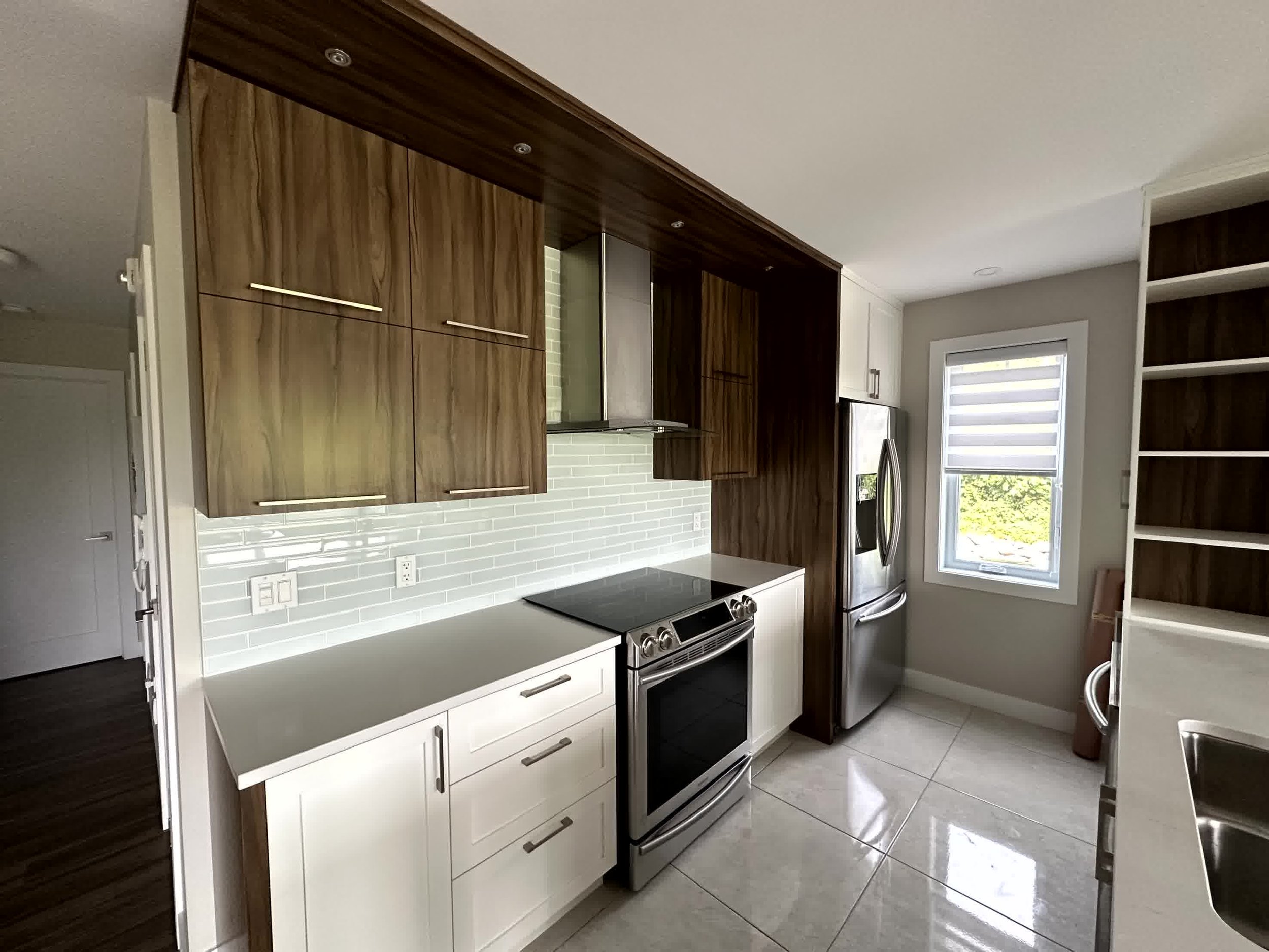
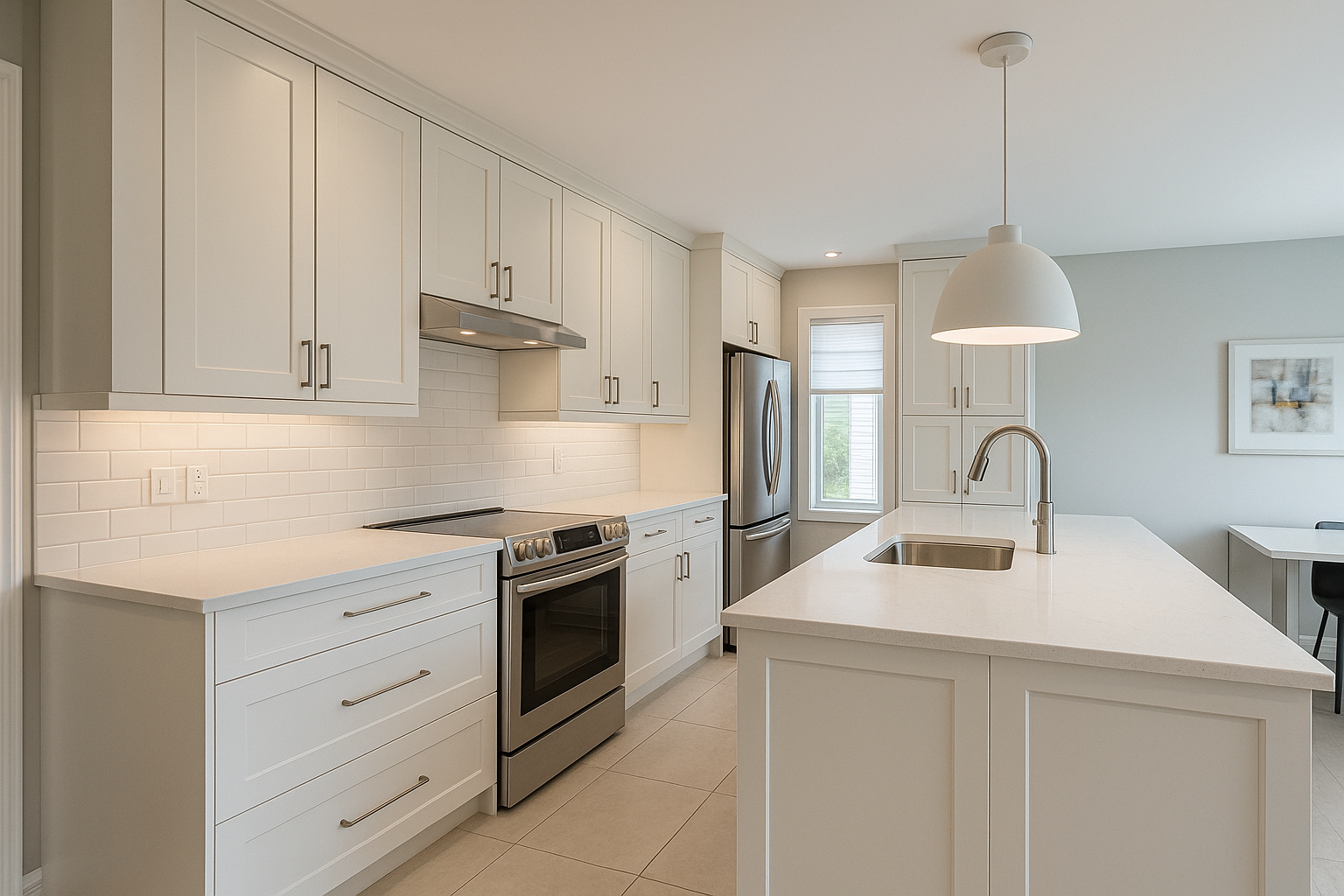
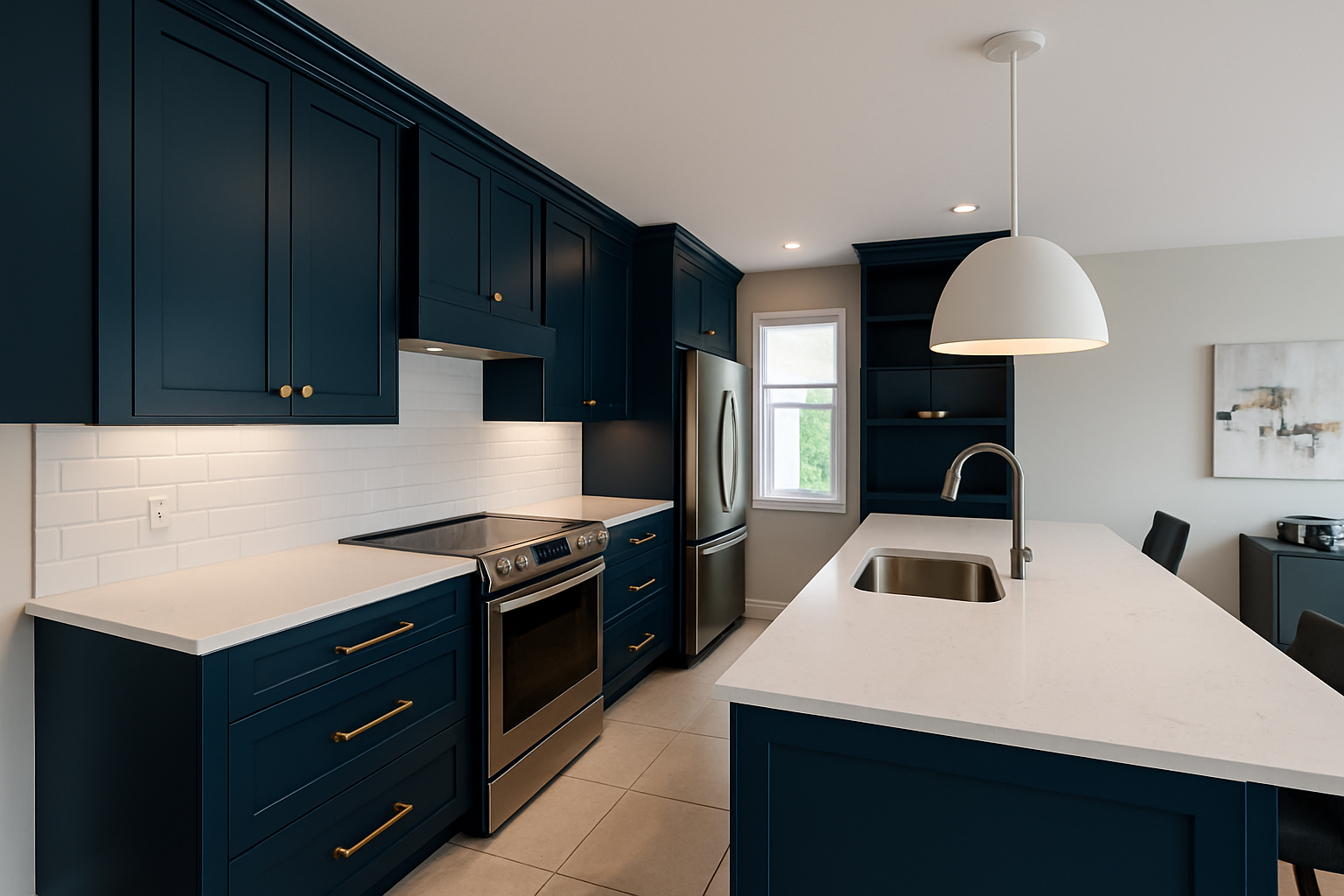
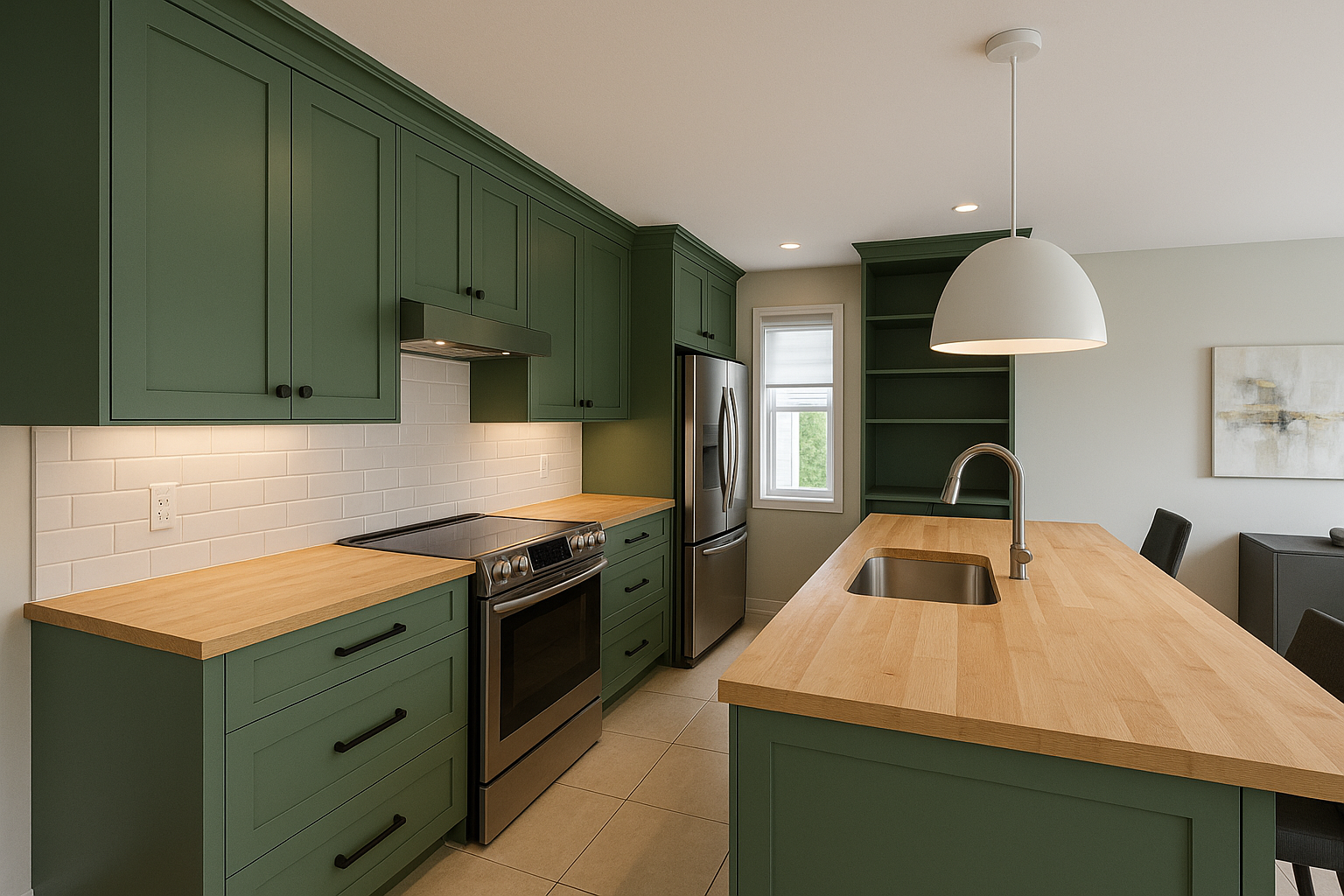
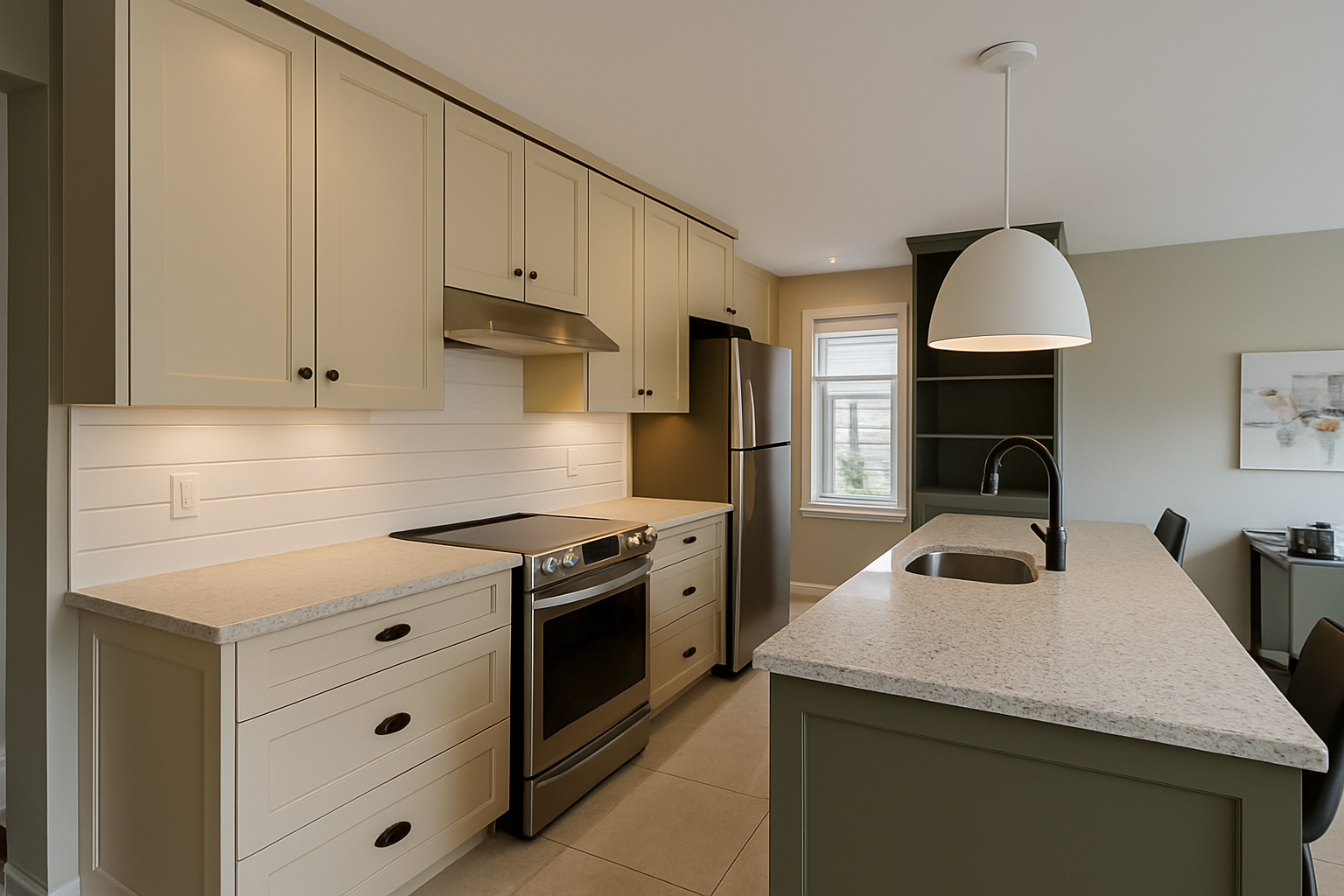
Seeing is believing. Below are examples of kitchen refacing transformations showing the range of styles achievable through cabinet refacing. Each project kept the original cabinet boxes and layout while completely transforming the kitchen's appearance.
Kitchen Refacing FAQ
Answers to the most common questions homeowners ask about refacing kitchen cabinets:
Kitchen refacing typically costs between $4,000 and $9,500 for a standard kitchen with 20 to 30 cabinet doors. The national average sits around $6,500. This includes new doors, drawer fronts, veneer for exposed cabinet frames, new hinges, and professional installation. Material choice is the biggest variable: laminate refacing starts around $3,800, while natural hardwood refacing can reach $12,000 or more for large kitchens.
Kitchen refacing is worth it if your existing cabinet boxes are structurally sound and you are satisfied with your current kitchen layout. You will save 40 to 50 percent compared to a full cabinet replacement while getting a kitchen that looks completely new. Refacing also adds measurable resale value. According to Remodeling Magazine's Cost vs. Value report, minor kitchen remodels (which include refacing) recoup roughly 72 to 78 percent of costs at resale.
A professional kitchen refacing project typically takes 3 to 5 days for an average-sized kitchen with 20 to 30 doors. More complex projects with custom details, specialty finishes, or larger kitchens can take up to 7 to 10 days. This is dramatically faster than a full kitchen renovation, which usually requires 6 to 12 weeks. Your kitchen remains usable throughout most of the refacing process.
Yes, kitchen refacing is one of the more accessible DIY kitchen projects. If you have basic woodworking skills and are comfortable using a saw, drill, and contact cement, you can reface cabinets yourself and save 40 to 60 percent on labor costs. Self-adhesive veneer makes the frame-covering step relatively straightforward. However, precision matters: poorly aligned doors and uneven veneer will be visible and hard to fix. If you are not confident in your measuring and cutting accuracy, hiring a professional is a safer investment.
Refacing and refinishing are different processes. Refinishing means sanding down existing doors and applying new paint or stain without changing the door itself. Refacing replaces the doors and drawer fronts entirely and applies a matching veneer to the visible cabinet frames. Refacing gives you the option to change door style (for example, from raised panel to Shaker), while refinishing keeps the original door style and only changes the color or finish. Refacing costs more ($4,000 to $9,500) than refinishing ($1,500 to $4,000) but delivers a bigger transformation.
The four main materials used in kitchen refacing are natural wood (oak, maple, cherry, birch), rigid thermofoil or RTF (a vinyl film heat-wrapped onto MDF doors), laminate (high-pressure plastic sheets bonded to substrate), and polyester/acrylic (smooth, modern finishes in gloss or matte). Each has distinct pros and cons regarding durability, appearance, heat resistance, and price point. Natural wood is the most durable and versatile. Thermofoil is the most affordable. Laminate offers the best scratch resistance. Polyester gives the sleekest modern look.
Yes. Kitchen refacing contributes to a minor kitchen remodel, which Remodeling Magazine's annual Cost vs. Value report consistently ranks among the top home improvement projects for return on investment. Homeowners typically recoup 72 to 78 percent of their refacing investment when selling. Kitchens are the single most scrutinized room by homebuyers, and updated cabinet fronts make a strong first impression without the $20,000+ price tag of a full kitchen overhaul.
No. Kitchen refacing keeps your existing cabinet boxes in place, so the layout stays the same. If you need to move, add, or remove cabinets, you are looking at a partial or full cabinet replacement. However, many refacing projects include adding new cabinet accessories inside the existing boxes, such as pull-out shelves, lazy Susans, or drawer organizers, which improve functionality without changing the layout.
Professionally refaced kitchen cabinets last 15 to 20 years or longer, depending on material quality and household wear. Natural wood doors are the most durable and can be refinished again later. Thermofoil doors typically last 10 to 15 years before potential peeling near heat sources. Laminate is highly durable and scratch-resistant, lasting 15 to 20 years with normal use. All options outlast a cosmetic paint job, which typically needs refreshing every 5 to 7 years.
Kitchen refacing is not ideal when the cabinet boxes are damaged, warped, or water-logged; when you want to change the kitchen layout significantly; when the cabinets are very low-quality particleboard that will not hold new doors reliably; or when the total cost of refacing plus other needed repairs approaches the cost of full replacement. If more than 30 percent of your cabinet boxes need structural repair, full replacement usually makes more financial sense. Also consider replacement if you are already planning to move plumbing or electrical, since the kitchen will be torn up anyway.